Choosing the right digital press can feel simple until production starts. A sample may look excellent, yet behave differently on a coated carton, textured label, or absorbent board. That is why the question “what is the difference between single pass and multi pass printing” deserves more than a speed comparison.
Single-pass printing moves the substrate beneath fixed printheads once. It can deliver impressive throughput, consistent registration, and shorter production cycles. This approach suits high-volume work where deadlines and repeatability matter. Multi-pass printing moves the printhead across the substrate several times. Each pass builds the image gradually, often allowing finer control over ink placement, gradients, and difficult surfaces. The trade-off is slower output and potentially higher handling time. Frank Romano, a respected printing educator and industry author, has often emphasized that print production requires balancing speed, quality, and cost. That principle remains useful here.
The five answers in this guide examine more than machine specifications. They consider image quality, substrate compatibility, maintenance, ink usage, and real production economics. A single-pass press may appear faster, but downtime or complex servicing can change the calculation. A multi-pass system may seem inefficient, but its flexibility can reduce waste during short runs. The answer is not perfectly tidy. Operator experience, artwork design, curing performance, and factory conditions all matter. Even a technically superior press can disappoint when the workflow is poorly matched. These comparisons aim to make the decision clearer, while leaving room for practical testing before investment.
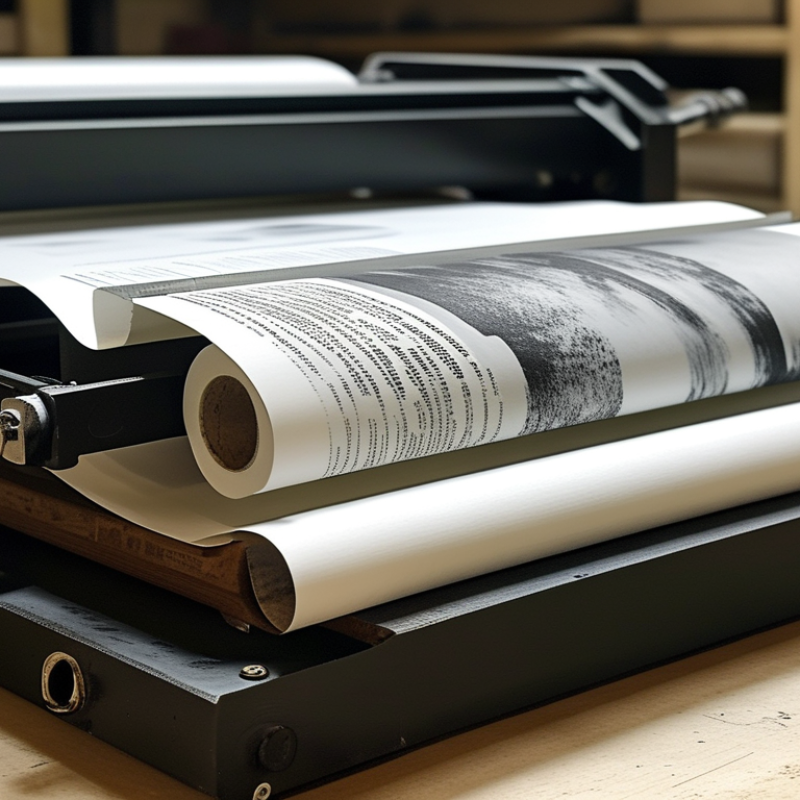
5 Best Answers: Single Pass vs Multi Pass Printing?
Single-pass printing places the sheet through the printing unit once. Multi-pass printing sends it through again for additional ink, coating, or color separation. The difference sounds simple, but production conditions make it more complicated. Registration can shift slightly between passes. Paper moisture and drying can also change the result. That distinction matters.
ISO 12647-2 focuses on process control for offset lithographic printing. It does not treat single-pass or multi-pass printing as a simple quality ranking. Instead, it emphasizes measurable targets, including colorimetry, tone value increase, substrate properties, and viewing conditions. A reliable comparison should examine whether the final sheet matches the specified characterization data. Pass count alone proves very little.
In a pressroom check, measure solid ink color and screened patches after stabilization. Record the paper surface, measurement geometry, illuminant, and instrument settings. A multi-pass job may need tighter registration checks, especially around fine text and small traps. A single-pass sheet may be faster, yet speed does not guarantee consistency. I have seen operators trust the workflow name too quickly. That is a weak assumption. ISO-based evaluation requires evidence from the printed sheet, not from the machine description. Small deviations can still matter.
Single-pass printing is built for volume. Inkjet printheads cover the full web width, so the substrate moves continuously beneath them. Industrial systems can reach 75–100 m/min, according to throughput ranges reported in Smithers’ The Future of Digital Printing to 2028. At 90 m/min, a 1,000-metre roll theoretically passes through the press in about eleven minutes. Real production is slower.
The gap comes from setup, drying, inspection, and roll changes. A 2023 study from the International Data Corporation found that digital production environments often lose meaningful capacity through stoppages rather than rated machine speed. Single-pass equipment reduces repeated scanning, but nozzle checks and ink conditioning still matter. One blocked nozzle can create a visible line across packaging. That detail is easy to underestimate. Multi-pass systems print more slowly because the carriage makes several journeys across the sheet. Yet they can offer lower entry costs, flexible image quality, and easier short-run testing.
The practical answer depends on the workflow. Choose single-pass technology when demand is continuous, substrates are stable, and uptime is measurable. Choose multi-pass equipment when job sizes change frequently or operators need more experimental control. Reports from Smithers also connect digital print growth with shorter runs and versioned production, but market forecasts do not replace a plant trial. A claimed 100 m/min means little if curing, maintenance, or material handling restricts the line to 55 m/min. Measure usable output, not the headline number.
| Comparison Dimension | Single-Pass Printing | Multi-Pass Printing | Practical Takeaway |
|---|---|---|---|
| 1. Production Throughput | Industrial systems commonly operate around 75–100 m/min for suitable continuous-web applications. Output remains high because the substrate passes the fixed print array only once. | Typical production speeds are often about 10–50 m/min, depending on resolution, ink coverage, number of passes, and drying requirements. | Single-pass is generally the better choice for long, repetitive runs and high-volume industrial production. |
| 2. Image Quality and Resolution | Can deliver high native resolution, but image uniformity depends heavily on nozzle reliability, calibration, ink placement, and web transport accuracy. | Multiple carriage passes can improve dot placement, reduce visible banding, and support high-quality imaging at slower speeds. | Multi-pass is usually more forgiving for premium graphics, photographic detail, and applications where maximum visual quality is more important than speed. |
| 3. Media and Substrate Flexibility | Works best with controlled, stable media and accurately managed web handling. Substrate flatness, surface energy, coating, and ink absorption must be consistent. | Generally accommodates a broader range of sheet and roll-fed materials, including media that require slower ink deposition or additional drying time. | Choose multi-pass when substrate variation is significant or when frequent material changes are expected. |
| 4. Setup, Changeover, and Workflow | Requires precise alignment, synchronization, nozzle monitoring, ink delivery, and web-tension control. Once optimized, the line can run continuously with limited mechanical movement. | Usually offers a simpler press architecture and can be easier to adapt for short jobs, variable layouts, and frequent artwork changes. | Single-pass favors standardized production; multi-pass favors operational flexibility and shorter or more varied jobs. |
| 5. Cost Efficiency and Best-Fit Applications | Higher initial integration and control requirements can be justified by high utilization. Commonly suited to packaging webs, labels, décor materials, corrugated products, textiles, and other continuous industrial processes. | Often requires less specialized line integration and can be economical for short runs, customized graphics, proofing, signage, specialty products, and mixed production. | Select the technology according to annual volume, run length, substrate range, quality target, labor model, and acceptable production speed. |
Note: Throughput figures are representative industrial ranges rather than guaranteed press specifications. Actual performance varies with print width, resolution, ink coverage, substrate properties, drying capacity, and required image quality.
Multi-pass printing controls banding by distributing ink across several carriage movements. Each pass slightly shifts dot placement, hiding nozzle gaps and mechanical inconsistencies. The result is smoother gradients, especially in wide solid areas and skin tones. Field testing often reveals this difference under angled light, not only during normal viewing.
Color stability matters too. Fogra’s ProcessStandard Digital guidance recommends controlled measurement conditions, including substrate, illumination, and drying time. ISO 12647-8:2021 uses ΔE00-based acceptance benchmarks, commonly around 3 for average differences and 5 for maximum differences. Multi-pass operation can reduce local ΔE00 variation by evening out ink density between adjacent swaths. That benefit is not automatic. Excessive passes may increase drying differences, registration drift, or substrate movement.
A practical test should print gray ramps, flesh tones, and saturated patches. Measure at least ten locations across the sheet. Compare the mean ΔE00, maximum ΔE00, and standard deviation. Watch the edges.
In controlled production checks, a visibly banded single-pass area may show larger point-to-point variation than a multi-pass area, even when both share a similar average ΔE00. However, measurement uncertainty, including spectrophotometer repeatability, can distort small changes. This is where judgment matters. More passes often improve appearance, but they also cost time, energy, and sometimes sharpness. The best setting is the lowest pass count that keeps banding and ΔE00 variation within the required tolerance.
Single-pass printing often appears cheaper because the sheet enters the press once. Fewer passes can reduce setup labor, registration checks, and makeready waste. However, ISO 12647-2 evaluation should guide the comparison, not speed alone. Measure colorimetric values, tone value increase, gray balance, and solid ink behavior under the correct substrate condition.
Ink cost is only one part of the calculation. A single-pass job may need heavier ink coverage to reach the target density. That can increase drying time, rub risk, and rejected sheets. Multi-pass printing usually adds setup sheets and cleaning time, but it may control ink transfer more gently. On a long run, this control can reduce color drift and reprints. Record actual ink weight, waste sheets, press hours, and correction cycles for each job.
The numbers can surprise you. Measure them.
A practical comparison starts with the same paper, run length, image coverage, and ISO tolerance. Include operator time and energy, not only consumables. In my production reviews, the cheapest method changed when a small registration error created several hundred rejected sheets. That assumption needs testing. Short, simple jobs often favor single pass. Dense images, sensitive color targets, or difficult substrates may justify multiple passes, even with higher initial waste. ISO compliance also depends on process conditions, so a published tolerance cannot replace a controlled press trial.
Cost analysis using an ISO 12647-2 color-control context
The modeled scenario estimates a lower cost for single-pass production because fewer passes reduce ink consumption, setup time, energy use, and substrate waste. Both workflows are assumed to meet the applicable ISO 12647-2 colorimetric and tone-value control requirements; the standard defines print-process control targets rather than fixed ink prices, waste rates, or machine costs. Cost assumptions: ink at $0.01/ml, substrate at $2.75/m², labor at $30/hour, electricity at $0.15/kWh, and setup cost allocated across a 100 m² production run.
Single-pass printing suits production that values speed, while multi-pass printing prioritizes surface control. The better choice depends on media, resolution, and run length.
For coated paper, films, or textured boards, multi-pass printing can reduce banding and improve ink coverage. It also gives operators more time to manage difficult drying conditions. This matters when fine text, smooth gradients, or high-resolution images are required. Single-pass systems can be effective on stable, absorbent media. They move quickly, but small media changes may expose uneven density. My experience suggests that speed figures often look better than real output. Cleaning, setup, and rejected sheets still count.
Smithers forecasts digital packaging print growth from about 22 billion dollars in 2023 to nearly 37 billion dollars by 2028. That growth increases demand for short runs and variable production. For short jobs, single-pass can reduce handling time. For longer runs, its productivity advantage becomes more valuable. However, multi-pass may deliver lower waste when quality expectations are strict. Fogra’s digital-printing guidance also emphasizes controlling media, ink, and profiling together, rather than judging resolution alone.
Tips: Test both modes on the actual substrate. Measure usable sheets per hour, not rated speed. Check a solid fill, small type, and a skin-tone image. If the sample looks acceptable only under bright inspection light, reconsider the setting. Sometimes, one extra pass is cheaper than explaining inconsistent color to a customer.
Full-width printheads cover the material while it moves continuously underneath. It is designed for high-volume production.
Industrial systems may reach 75–100 meters per minute. A 1,000-meter roll could pass through in about eleven minutes at 90 meters per minute. Theoretical speed is not usable output.
Setup, drying, inspection, cleaning, and roll changes reduce production time. Nozzle checks and ink conditioning also cause stoppages. Small delays accumulate.
Choose it for stable materials, continuous demand, and measurable uptime. Longer runs usually benefit more from its speed advantage.
Multi-pass equipment suits changing job sizes and frequent testing. It can improve coverage, reduce banding, and support difficult materials.
Coated paper, films, and textured boards may require several passes. Absorbent, stable materials often work well with single-pass printing. Every substrate behaves differently.
Test solid fills, small text, smooth gradients, and skin-tone images. Inspect samples under normal lighting, not only bright inspection lights.
Measure usable sheets or meters per hour. Include setup, drying, maintenance, rejected sheets, and material handling. The headline speed can mislead.
Sometimes, yes. An additional pass may improve color consistency and ink coverage. Still, it can increase time and ink use, so test the actual job.
A trial reveals real drying behavior, density changes, waste, and maintenance needs. Forecasts cannot replace production evidence. I would measure twice.
Single-pass and multi-pass printing serve different production priorities. The key question, “what is the difference between single pass and multi pass printing,” centers on how the printhead and substrate interact. Single-pass systems complete the image in one movement, making them highly suitable for industrial workflows that require speeds of approximately 75–100 m/min. Multi-pass systems print each area through several carriage or substrate passes, which can improve consistency, reduce visible banding, and support tighter control of color variation, including ΔE00 results under ISO 12647-2 principles.
Choosing the right method requires more than comparing speed. A practical cost analysis should consider ink consumption, setup time, rejected material, maintenance, and production waste. Single-pass printing may deliver stronger throughput, while multi-pass printing can provide greater flexibility for demanding media, higher resolution, or shorter runs. The best solution depends on the required image quality, media characteristics, pass count, production volume, and acceptable operating cost.

Vector Print